
Dark web search engine onion
Dark web search engines with .onion domains index hidden sites. Learn how to use them safely and effectively.
Written: · 16 min
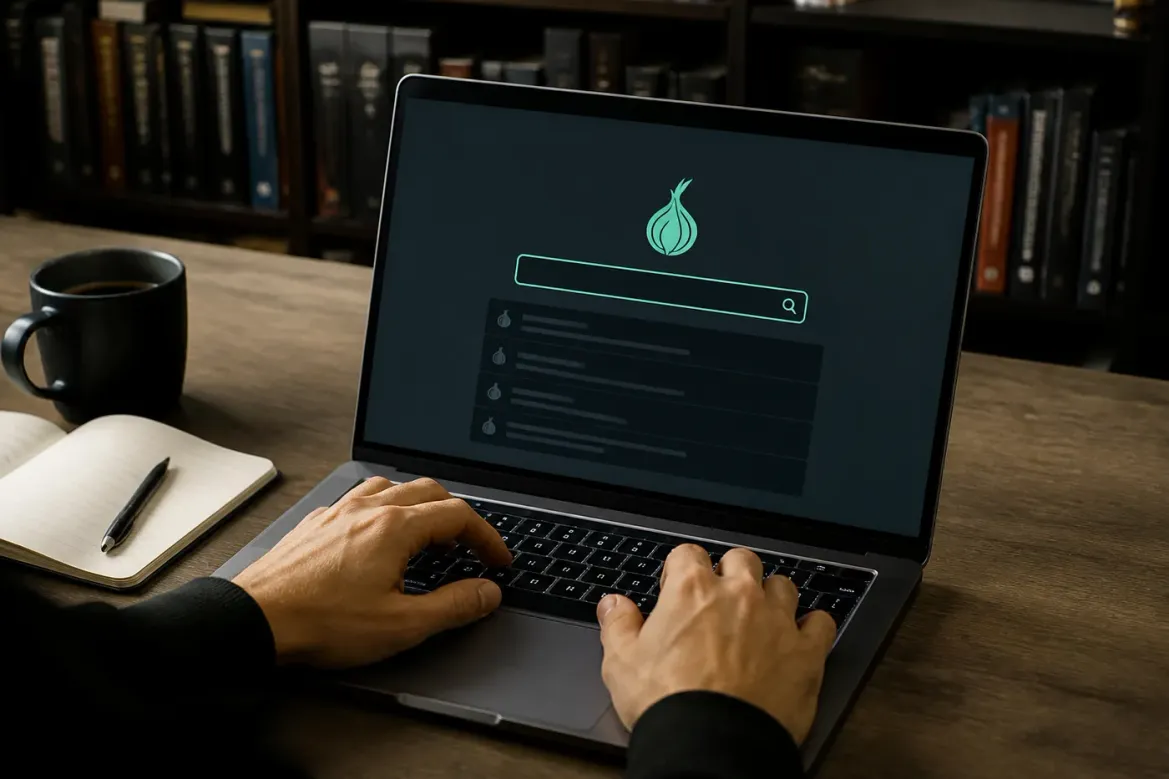
A dark web search engine indexes .onion services reachable only inside the Tor network. Conventional engines like Google cannot access them because .onion addresses do not resolve via standard DNS and require the Tor protocol. (1)
Ahmia, launched in 2014, is an open-source option that filters child sexual abuse material. (2) (3) Torch, active since 2013, applies minimal filtering. (1)
Use only verified .onion addresses checked character by character. Accessing illegal content remains a crime in the UK. (4)
What Are Dark Web Search Engines and How Do They Work?
Dark web search engines are designed to index .onion services, which are websites accessible exclusively through the Tor network. These search engines fill a gap left by conventional engines like Google and Bing, which cannot reach .onion addresses due to their unique structure and the necessity of the Tor protocol for access (3).
Onion services, previously known as hidden services, utilize a complex routing method. Their addresses are derived from a public key, ensuring anonymity for both the user and the service provider. Traffic flows through multiple layers of encryption before reaching a rendezvous point, where connections are established without revealing the IP addresses of either party (3).
The indexing process for dark web search engines differs significantly from that of surface web search engines. Conventional search engines rely on standard DNS to resolve addresses, while onion search engines must operate within the Tor network. This requires specialized crawlers capable of navigating the Tor protocol (1). Crawling limitations also exist; for instance, a 2025 study indicated that six major onion search engines collectively identified 36,028 unique .onion addresses in a single day. Notably, Ahmia contributed 18,069 addresses, which is approximately 4-5% of the estimated 800,000 onion services available (5).
In terms of index sizes, while some engines like Torch claim to index over one million .onion pages, these figures are often unverified (1). The challenges of crawling the dark web include encountering sites that may host illegal content, scams, or malware, which can pose significant risks to users (3).
Overall, users must approach dark web search engines with caution, verifying .onion addresses character by character to avoid phishing attempts and other dangers (6).
Most Popular Onion Search Engines in 2025
Several search engines cater to the unique needs of .onion users. Here are four of the most popular options.
Ahmia
Ahmia is an open-source search engine introduced in 2014 by Juha Nurmi. It indexes .onion services and filters out content related to child sexual abuse material (CSAM), maintaining a blocklist of over 46,000 addresses (2) (3). Ahmia's crawler has indexed approximately 18,069 unique .onion addresses, which is about 4-5% of the estimated 800,000 onion services available (5). Its address is http://ahmia.fi.
Torch
Torch is one of the oldest onion search engines, active since around 2013. It claims to index over one million .onion pages, although these numbers are often unverified (1). Torch operates with minimal filtering, making it both a popular and risky choice for users. The current .onion address is http://xmh57jrknzkhv6y3ls3ubitzfqnkrwxhopf5aygthi7d6rplyvk3noyd.onion, but users should verify addresses due to frequent cloning and phishing attempts (6).
Haystak
Haystak offers a more comprehensive search experience compared to other engines. It claims to index over 1.5 million .onion pages and allows for advanced search queries, including filters for specific categories (2). While its exact address may vary, it is generally accessible through a straightforward .onion link.
Excavator
Excavator is a lesser-known engine that focuses on deep web content. It provides a user-friendly interface and claims to index a significant number of .onion sites. This search engine does not have extensive filtering, which can expose users to risks associated with illegal content. Users can access Excavator at its designated .onion address.
When using these search engines, it is crucial to approach them with caution. Exposure to illegal content and malware is a risk, as studies indicate around 20% of sampled onion domains may host such material (3). Always verify .onion addresses character by character to mitigate potential threats.
Direct .Onion Links to Major Dark Web Search Engines
Accessing dark web search engines requires the use of verified .onion addresses. Here are the current links for some of the most notable search engines:
Ahmia
Ahmia is an open-source search engine that filters out child sexual abuse material and indexes .onion services. It has indexed about 18,069 unique .onion addresses, which is roughly 4-5% of the Tor Project’s estimated 800,000 onion services. The current .onion address for Ahmia is http://ahmia.fi.
Torch
Torch is one of the oldest Tor search engines, operational since around 2013. It claims to index over one million .onion pages, although this number is often unverified. The current .onion address for Torch is http://xmh57jrknzkhv6y3ls3ubitzfqnkrwxhopf5aygthi7d6rplyvk3noyd.onion. Due to frequent cloning and phishing attempts, users should verify this address character by character (6).
Haystak
Haystak is known for its comprehensive search capabilities, claiming to index over 1.5 million .onion pages. It allows users to conduct advanced search queries with specific filters. The .onion address for Haystak is http://haystak5njsmn2hqkewecpaxetahtwhsbsa64jom2k22z5afxhnpxfid.onion.
Excavator
Excavator focuses on deep web content and offers a user-friendly interface. While it does not have extensive filtering, it indexes a significant number of .onion sites. The specific .onion address can vary, so it is important to verify it before use.
When using these search engines, exercise caution. Exposure to illegal content and malware is a risk, with studies indicating that around 20% of sampled onion domains may host such material (3). Always check .onion addresses for accuracy to mitigate potential threats.
Effectiveness Comparison of Onion Search Engines
The effectiveness of onion search engines varies significantly in terms of result relevance, update frequency, and coverage. This section compares three notable search engines: Ahmia, Torch, and Haystak.
Result Relevance
Ahmia focuses on filtering out illegal content, particularly child sexual abuse material (CSAM). It maintains a blocklist of over 46,000 addresses, ensuring safer search results (3). Torch, on the other hand, applies minimal filtering, which may lead to exposure to illegal content. This lack of filtering can provide more diverse results but also increases the risk of encountering harmful material (1). Haystak offers advanced search queries, allowing users to filter results by categories, which can enhance result relevance for specific needs.
Update Frequency
Ahmia's crawler updates its index regularly, contributing significantly to its database of approximately 18,069 unique .onion addresses, representing about 4-5% of the estimated 800,000 onion services (5). Torch claims to index over one million .onion pages, but the frequency of its updates is less clear, leading to questions about the freshness of its results (1). Haystak’s indexing process is also not well-documented, making it difficult to assess how often it refreshes its database.
Coverage
Coverage varies notably among these search engines. Ahmia has indexed a substantial number of .onion addresses but is selective about the content it includes. Torch claims extensive coverage but lacks verification for its figures (1). Haystak claims to index over 1.5 million .onion pages, suggesting a broader coverage, yet this number is also unverified.
Example Searches
For identical test terms, results can differ significantly. For example, searching for "dark web news" on Ahmia may yield safer, filtered results focused on legitimate news sources. In contrast, Torch might return a mix of reputable and questionable sites, potentially exposing users to illegal content. Haystak's results could include a broader range of articles, depending on its advanced filtering capabilities.
In summary, Ahmia offers the safest results, Torch provides extensive but potentially risky options, and Haystak balances coverage with advanced search features. Users should choose their search engine based on their specific needs and risk tolerance.
Key Risks and Safety Concerns When Using Dark Web Search Engines
Using dark web search engines carries significant risks. Key concerns include exposure to illegal content, malware distribution, and deanonymization.
Accessing illegal content is a prevalent issue. Studies indicate that approximately 20% of sampled onion domains contain child sexual abuse material (CSAM) (3). Users may unknowingly encounter such content while searching. Engaging with these materials can lead to severe legal consequences, including imprisonment in jurisdictions like the UK (4).
Malware distribution is another major risk. Search results from dark web engines may lead to sites hosting malicious files or phishing attempts. Malware can compromise your device, steal personal information, or exploit vulnerabilities. Research indicates that many users fall victim to scams and malware, particularly when using unfiltered search engines (3).
Deanonymization risks also exist. While the Tor network aims to provide anonymity, users can still be tracked through various means. Law enforcement agencies actively monitor the dark web, with a focus on illegal activities. This monitoring poses a risk of identification for users who engage with illicit content or fail to use additional privacy tools, such as a VPN (4).
In summary, while dark web search engines can provide access to unique content, they also expose users to significant risks. Awareness and caution are essential when navigating this environment. Always verify .onion addresses character by character and avoid engaging with questionable content.
How to Access and Use Onion Search Engines Safely
Accessing onion search engines requires specific steps to ensure safety. First, set up the Tor Browser, which is essential for navigating .onion domains. Download the Tor Browser from the official Tor Project website, ensuring you are using the latest version.
After installation, consider using a VPN alongside Tor for added security. A VPN can mask your IP address and encrypt your internet traffic, providing an extra layer of anonymity. This approach is effective if you are concerned about deanonymization risks, especially when accessing sensitive content (4).
Once you have the Tor Browser and VPN set up, proceed to access onion search engines. Always use verified .onion addresses to avoid phishing attempts. For instance, the Ahmia search engine can be accessed through its official .onion address. Always verify these addresses character by character to prevent falling victim to cloned sites (6).
When using search engines like Torch or Haystak, exercise caution. These platforms may expose users to illegal content, scams, or malware. Studies indicate that around 20% of sampled onion domains host child sexual abuse material (CSAM) (3). Avoid clicking on unknown links or suspicious results, as these can redirect you to harmful sites or lead to malware downloads.
Recognizing phishing attempts is crucial. For example, if a link appears similar to a legitimate .onion address but has slight variations, it may be a scam. Always ensure links are accurate and sourced from trusted platforms.
In summary, accessing onion search engines safely involves using the Tor Browser with a VPN, verifying .onion addresses meticulously, and maintaining awareness of potential risks. Following these guidelines can significantly enhance your safety while exploring the dark web.
Common Mistakes That Compromise User Safety
Navigating the dark web requires caution. Many users make errors that can significantly compromise their safety. Here are some common mistakes to avoid.
Using Clearnet Mirrors
Accessing clearnet mirrors of dark web sites can be risky. These mirrors may not offer the same level of anonymity or security as the original .onion sites. Users might inadvertently expose their IP addresses or fall victim to phishing scams. For example, a mirror site could mimic a legitimate service but lead users to malicious content instead.
Disabling Tor Security Settings
Some users disable security settings in the Tor Browser for convenience. This action can expose users to various risks, including deanonymization and malware. The Tor Browser is designed to protect user privacy, and altering its settings can undermine these protections. Always keep security settings enabled to maintain anonymity while browsing.
Searching for Illegal Terms
Entering illegal terms into search engines can lead to serious consequences. Law enforcement actively monitors dark web activity, and searching for prohibited content may attract attention. Research indicates that engaging with illegal content can result in severe legal penalties, including imprisonment in jurisdictions like the UK (4).
Ignoring Malware Risks
Users often overlook the potential for malware when using dark web search engines. Studies show that around 20% of sampled onion domains may host child sexual abuse material (CSAM) and other harmful content (3). Clicking on unverified links can lead to malware infections that compromise personal information or damage devices.
Failing to Verify .Onion Addresses
Many users neglect to verify .onion addresses before use. This oversight can result in accessing cloned or phishing sites. Always check .onion addresses character by character to ensure they are legitimate and sourced from trusted platforms (6).
In summary, avoiding these common mistakes can greatly enhance your safety on the dark web. Always prioritize security and remain vigilant against potential threats.
Legal Considerations and What Is Allowed
Accessing dark web search engines is generally legal in many jurisdictions, including the US and the UK. However, the legality of the content accessed through these engines varies significantly. Users should be aware that while using the Tor network itself is not illegal, engaging with or distributing illegal content can lead to serious legal consequences (4).
In the US, accessing dark web content that involves criminal activity, such as child sexual abuse material (CSAM), drug trafficking, or illegal weapons sales, is punishable by law. For instance, possession or distribution of CSAM can lead to severe penalties, including lengthy prison sentences (4). Similarly, in the UK, the law treats accessing illegal content as a serious offense, with potential imprisonment for those found guilty of such activities (4).
Internationally, perspectives on dark web usage vary. Some countries have strict laws against accessing or distributing illegal content, while others may have more lenient regulations. Regardless, the principle remains that users are responsible for their actions online. Engaging with illegal content, even unknowingly, can lead to legal repercussions.
Certain activities explicitly cross into illegal territory. For example, using dark web search engines to find and download CSAM is illegal and can result in immediate legal action. A study indicated that approximately 20% of sampled onion domains contained CSAM, highlighting the risks of exposure (3). Additionally, engaging in transactions for illegal goods or services can also lead to severe consequences.
To summarize, while accessing dark web search engines is legal, caution is essential. Users should avoid engaging with any illegal content and remain aware of the potential legal implications of their online activities. Always verify the legality of the content before proceeding, as ignorance of the law is not a valid defense.
Practical Safety Checklist Before Using Any Onion Search Engine
Using onion search engines can expose users to various risks. Following a safety checklist can help mitigate these risks.
Browser Settings
Use Tor Browser: Download and install the Tor Browser from the official Tor Project website. Ensure it is the latest version to benefit from updated security features.
Enable Security Settings: Keep the Tor Browser security settings enabled. This helps protect against deanonymization and malware risks.
Connection Verification
Use a VPN: Consider using a VPN alongside Tor. This adds an extra layer of anonymity by masking your IP address and encrypting your internet traffic (4).
Verify .onion Addresses: Always check .onion addresses character by character. Use trusted sources to confirm legitimacy and avoid cloned sites (6).
Result Evaluation
Assess Search Results: Be cautious of search results. Research indicates that around 20% of sampled onion domains may expose users to child sexual abuse material (CSAM) (3). Avoid clicking on suspicious links.
Use Filtered Search Engines: Opt for search engines like Ahmia, which filter out illegal content. This can reduce the likelihood of encountering harmful material (3).
Exit Strategies
Know When to Exit: If you encounter suspicious content or feel unsafe, exit immediately. Close the Tor Browser and disconnect from your VPN if used.
Clear Browser Data: After using onion search engines, consider clearing your browsing data. This can help minimize tracking risks.
Following this checklist can enhance your safety when using onion search engines. Awareness and caution are critical in navigating the dark web.
Comparison of Major Onion Search Engines
| Search Engine | Index Size | Update Frequency | Safety Features | Known Risks |
|---|---|---|---|---|
| Ahmia | 18,069 indexed addresses | Frequent updates | Public blocklist for CSAM | Exposure to CSAM, malware |
| Torch | Over 1 million pages (unverified) | Infrequent updates | Minimal filtering | Phishing, scams, malware |
| Haystak | Depends on user input | Regular updates | Search filters available | Exposure to illegal content |
| Excavator | Depends on user input | Varies | User-driven filtering | Scams, malware exposure |
Common questions
- Dark web search engine onion reddit
Reddit discussions often list Torch and Ahmia as popular onion search engines. These threads frequently share .onion links but many contain outdated or cloned addresses. Verify each address character by character from official sources before use. This approach works if you cross-check multiple recent posts; it fails when users copy links without checking.
- Dark web search engine onion free
Ahmia operates as a free open-source onion search engine since 2014. Torch has offered free access with minimal filtering since around 2013. Both index .onion services that standard engines cannot reach. Free access does not remove risks such as exposure to harmful content.
- Best dark web search engine onion
Ahmia stands out among onion search engines because it maintains a blocklist of over 46,000 hashed addresses for child sexual abuse material. Torch claims to index over one million pages yet applies almost no filtering. A 2025 study found Ahmia returned 18,069 unique addresses out of 36,028 collected that day. Choose based on whether you prioritize filtering or breadth of results.
- What search engine does Tor use?
Tor Browser has used DuckDuckGo as its default search engine since version 6.0.6. DuckDuckGo does not log personal information and runs an onion service for searches over Tor. This setup aligns with Tor's privacy goals. It applies only inside Tor Browser; other browsers require manual configuration.
- What is the hidden search engine in deep web?
Onion services function as hidden servers reachable only inside the Tor network. Their addresses consist of the service's public key and route traffic through rendezvous points without revealing IP addresses. Conventional search engines cannot index them due to lack of standard DNS support. This holds when the service uses current v3 addresses; v2 addresses stopped working after September 2021.
- How do search engines avoid finding links to the dark web?
Standard search engines avoid .onion links because those addresses cannot resolve through normal DNS. Crawlers would need to run inside the Tor network to reach them. This limitation exists for all engines that operate outside Tor. The rule changes only if the crawler is built to use the Tor protocol.
- Xmh57jrknzkhv6y3ls3ubitzfqnkrwxhopf5aygthi7d6rplyvk3noyd onion
The address xmh57jrknzkhv6y3ls3ubitzfqnkrwxhopf5aygthi7d6rplyvk3noyd.onion links to Torch in many 2026 guides. It faces frequent cloning and phishing attempts. Users must compare every character against the operator's primary source. This verification step is required each time; copied lists often lead to fake sites.
Conclusions
Common errors can expose users to unnecessary risks. Verify every .onion address character by character before visiting. Use only the Tor Browser with default security settings enabled. Avoid search terms that relate to illegal activity. Check results against known blocklists when possible. These steps reduce exposure to malware and unwanted content.
The facts show that 20 percent of sampled onion domains may contain harmful material. This holds true across multiple independent samples collected in recent years. Legal penalties in the United Kingdom remain severe for accessing prohibited content. Manchester residents face the same UK statutes as the rest of the country.
Next, review the step-by-step process in Accessing Onion Web Addresses: A Step-by-Step Guide before your first search.